The TDS Question: Is a Lower Reading Always Better?
TDS stands for Total Dissolved Solids. It represents the combined concentration of dissolved substances in water, including minerals and salts. A TDS meter can provide a useful indication of changes in dissolved solids, but it cannot identify every contaminant. For example, imagine your household's borewell water records a TDS reading of 350 ppm one month and 600 ppm a few months later. This change may indicate a shift in the dissolved mineral content and deserves investigation. However, it does not prove that the water is toxic or identify the cause. Similarly, a low TDS reading does not guarantee that water is free from bacteria, viruses or particular chemical contaminants. Laboratory testing is necessary to understand the actual water quality.
Why Borewell Water Needs Attention
When groundwater levels fall, some localities may experience reduced borewell output or changes in water chemistry. Depending on the aquifer and local conditions, groundwater may contain naturally occurring fluoride, iron, arsenic or other dissolved substances. Pollution from sewage, fertilisers and other sources can also affect groundwater. Not every borewell is unsafe, and deeper water is not automatically more contaminated. The important step is to test the water supplied to your home, particularly when the source changes or its quality appears different.
What Can Your Family Do?
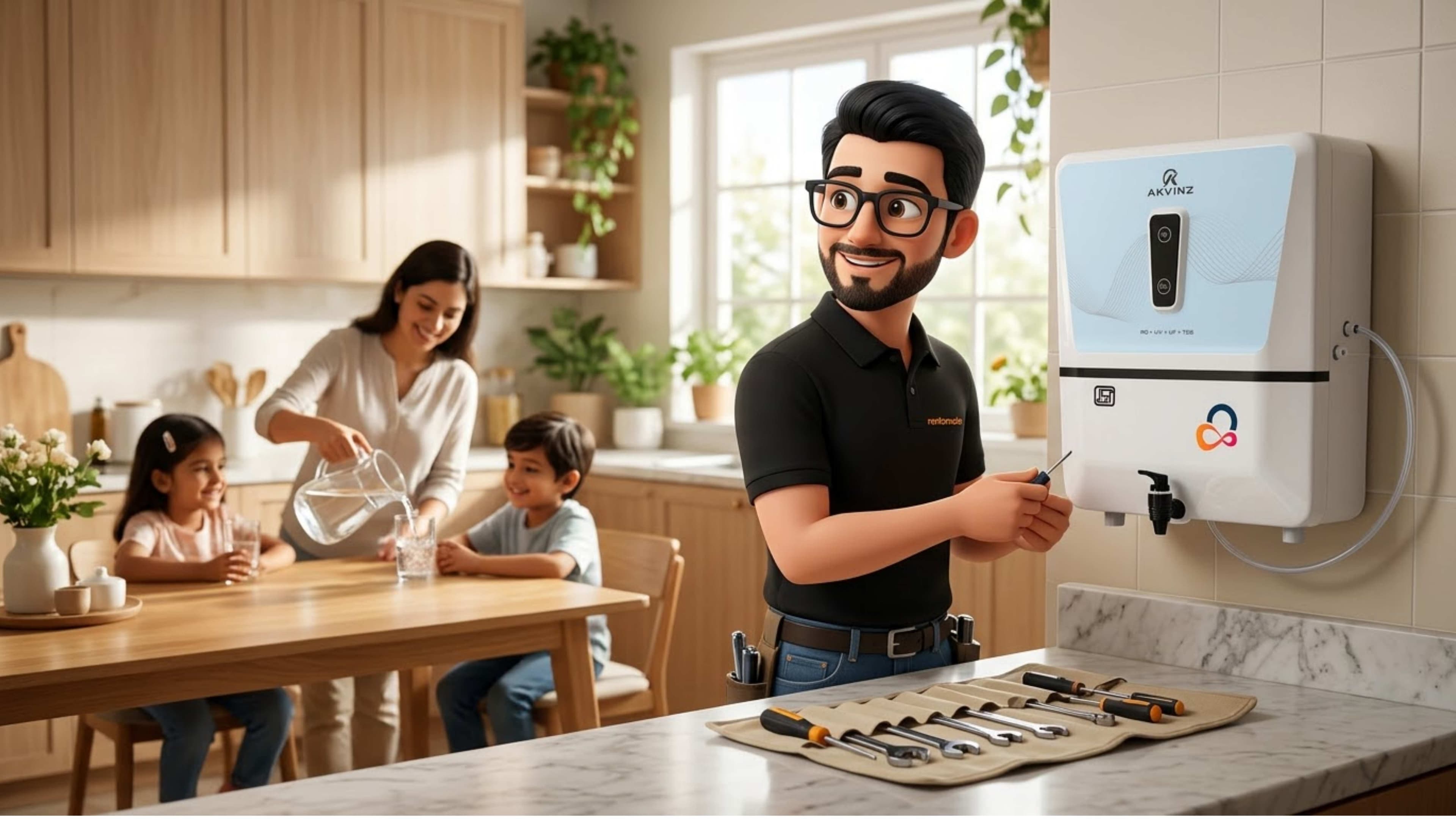
Start by identifying whether your home receives municipal water, borewell water, tanker water or a combination. Arrange suitable water testing through a qualified laboratory, and repeat testing when there is a meaningful change in the source or local conditions. Choose a water treatment system based on the test results. Different technologies address different contaminants, so no single purifier should be assumed to remove everything. Follow the manufacturer's maintenance schedule and replace filters or membranes when required. This is where RentOMate's philosophy, “Own Less. Live Smart.”, becomes relevant. Renting a water purifier may offer a practical alternative to purchasing one outright, particularly for households seeking flexible living arrangements. Before choosing a rental, confirm the product's treatment capabilities, service coverage, maintenance terms and suitability for your water source. Remember, the goal is not to fear every drop of tap water. It is to replace guesswork with informed decisions. Water may look pure, but knowing its quality is what helps you choose the right protection for your household.
1. Why Clear Water Can Be Misleading
“Sir, water is crystal clear. Why should we test it?” Because appearance alone cannot detect many dissolved chemicals or disease-causing microorganisms. Water can look perfectly normal and still require treatment.
2. Understanding TDS Fluctuations
TDS readings can change due to differences in water sources, seasonal conditions and the characteristics of the aquifer.
- A higher reading does not automatically mean water is toxic.
- A lower reading does not guarantee safety.
- A TDS meter cannot identify specific contaminants.
Use TDS readings as a screening tool, not as a complete water safety test.
3. How Falling Groundwater Levels Affect Water Quality
During dry periods, some localities rely more heavily on borewells and tanker supplies. Changes in groundwater levels and pumping patterns can coincide with changes in water chemistry, although the effects vary by location. The Government of India's CGWB groundwater resources information provides official data on groundwater availability and assessment. If your apartment switches water sources or you notice changes in taste, colour or odour, arrange testing rather than assuming the water is safe or unsafe.
4. Five Practical Steps to Safer Drinking Water
- Identify your water source: Municipal, borewell, tanker or mixed supply.
- Test the water: Use a qualified laboratory to check relevant microbiological and chemical parameters.
- Select suitable treatment: Match the purifier technology to the contaminants identified.
- Maintain your purifier: Follow the recommended filter and membrane replacement schedule.
- Retest when necessary: Reassess water quality if the source changes or a problem is suspected.
5. How RentOMate Fits into Smarter Water Choices
Buying a water purifier is not the only option. For households that prefer flexibility, renting may help avoid a large upfront purchase. RentOMate encourages practical household decisions through its philosophy, “Own Less. Live Smart.” Before selecting a rental purifier, check whether its technology suits your water test results, what maintenance is included and whether service is available in your locality. Explore the available options at https://rentomate.life.
1. Can clear tap water contain harmful contaminants?
Yes. Some chemical contaminants and microorganisms cannot be detected by sight, smell or taste. Appropriate water testing is the reliable way to assess water quality.
2. Does high TDS mean water is unsafe?
Not necessarily. TDS measures dissolved substances collectively and does not identify individual contaminants. Water safety depends on the substances present and their concentrations.
3. Does borewell water become toxic when groundwater levels drop?
Not automatically. Falling groundwater levels can affect water availability and may coincide with changes in water chemistry. Testing is needed to determine whether contamination is present.
4. Is RO purification necessary for every household?
No. The right treatment depends on the source water and its test results. RO can be useful for certain dissolved contaminants, but other problems may require different treatment methods.
5. How often should drinking water be tested?
Follow local public-health guidance and test when the source changes, contamination is suspected or monitoring indicates a need. Households using variable borewell or tanker supplies should consider periodic testing based on local conditions.
6. Can a rented water purifier provide safe drinking water?
It can help when the product is appropriate for the water source, correctly installed and properly maintained. Confirm the treatment specifications and service terms before renting.
Conclusion
Clear water is reassuring, but appearance alone cannot confirm drinking water safety. Changes in TDS, groundwater conditions and water sources are reasons to investigate, not reasons to panic. Test your water, select suitable treatment and maintain your purifier properly. If you prefer flexibility, consider renting a purifier that matches your household's needs. RentOMate — Own Less. Live Smart. Make informed choices for your home at https://rentomate.life.
Research References: - Central Ground Water Board: Ground Water Quality Reports - Central Ground Water Board: Ground Water Resource Assessment
Try Rent O' Mate free for 7 days
Starts from ₹449/month – Get pure RO water at home, with free installation and zero maintenance worries.
by RentOMate Team