When shopping for a home water purifier, most buyers focus almost entirely on the upfront price tag and festival discounts. However, the initial purchase amount is only the starting point of your financial commitment. Understanding the true lifespan cost of a purchased water filter requires looking at every recurring expense over the five to seven years a typical domestic unit remains in service. For Indian families, bachelors, and tenants, overlooking ongoing upkeep can turn a seemingly affordable appliance into a steady drain on the monthly household budget.
Why the Sticker Price Only Tells Part of the Story
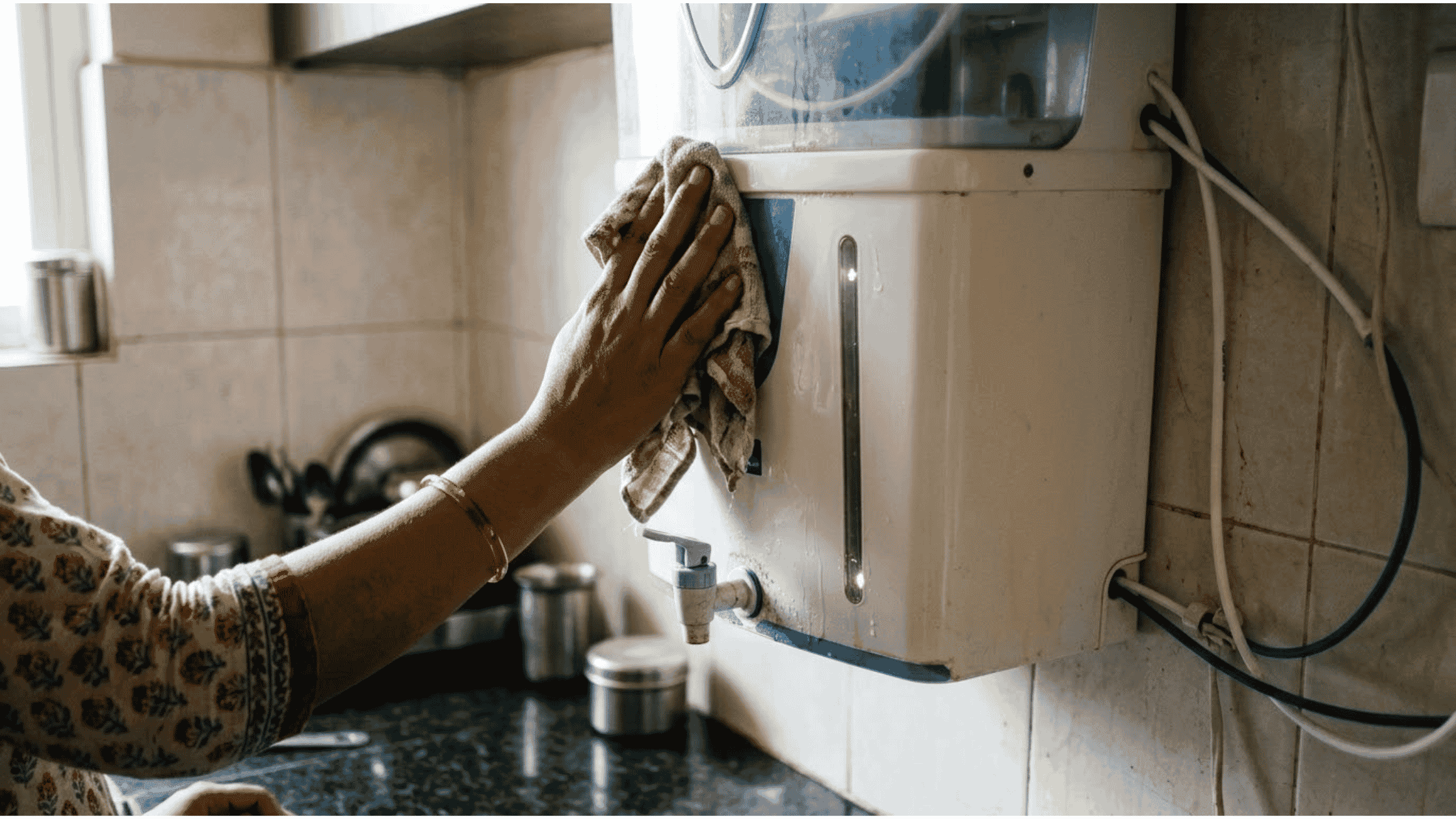
A water purifier is an active filtration system rather than a one-time appliance purchase like a ceiling fan or a dining table. Every litre of drinking water passes through consumable layers that trap dust, dissolved salts, and organic impurities. As these internal components fill up, they lose effectiveness and must be replaced on schedule to keep your drinking water safe.
In many Indian cities, including Coimbatore, water sources vary widely from one neighbourhood to another. Some apartments receive municipal Siruvani or Pillur supply with lower dissolved solids, while other homes rely heavily on hard borewell water or private water tankers. Higher hardness and sediment levels force filters to work harder, shortening component lifespans and increasing how frequently you must pay for technician visits.
Key Expense Categories in Water Purifier Ownership
To build an accurate estimate of your long-term spending, break your ownership expenses down into distinct categories. Grouping costs this way prevents hidden charges from catching you off guard after the first-year warranty expires.
- Upfront purchase and installation: The retail price of the purifier along with any extra plumbing fittings, pressure-reducing valves, or booster pumps required during setup.
- Routine consumable filters: Sediment filters, pre-carbon blocks, and post-carbon cartridges that generally require replacement once or twice a year depending on daily usage and source water quality.
- Major core components: The Reverse Osmosis (RO) membrane and Ultraviolet (UV) lamp, which cost noticeably more than basic sediment filters and typically require replacement every one to two years.
- Annual Maintenance Contracts (AMC) or visit fees: Out-of-warranty technician inspection charges or yearly service plans offered by brands and local service centres.
- Unplanned part failures: Replacement costs for electrical adapters, solenoid valves, float switches, or storage taps that wear out after the standard warranty period ends.
- Utility and water reject impact: Monthly electricity used by the booster pump and UV lamp, plus the cost of reject water discharged during RO purification if your household pays for tanker water.
- Uninstallation and reinstallation charges: Technician fees paid every time you shift to a new rented flat or move cities.
Step-by-Step Formula to Calculate Your Total Lifespan Cost
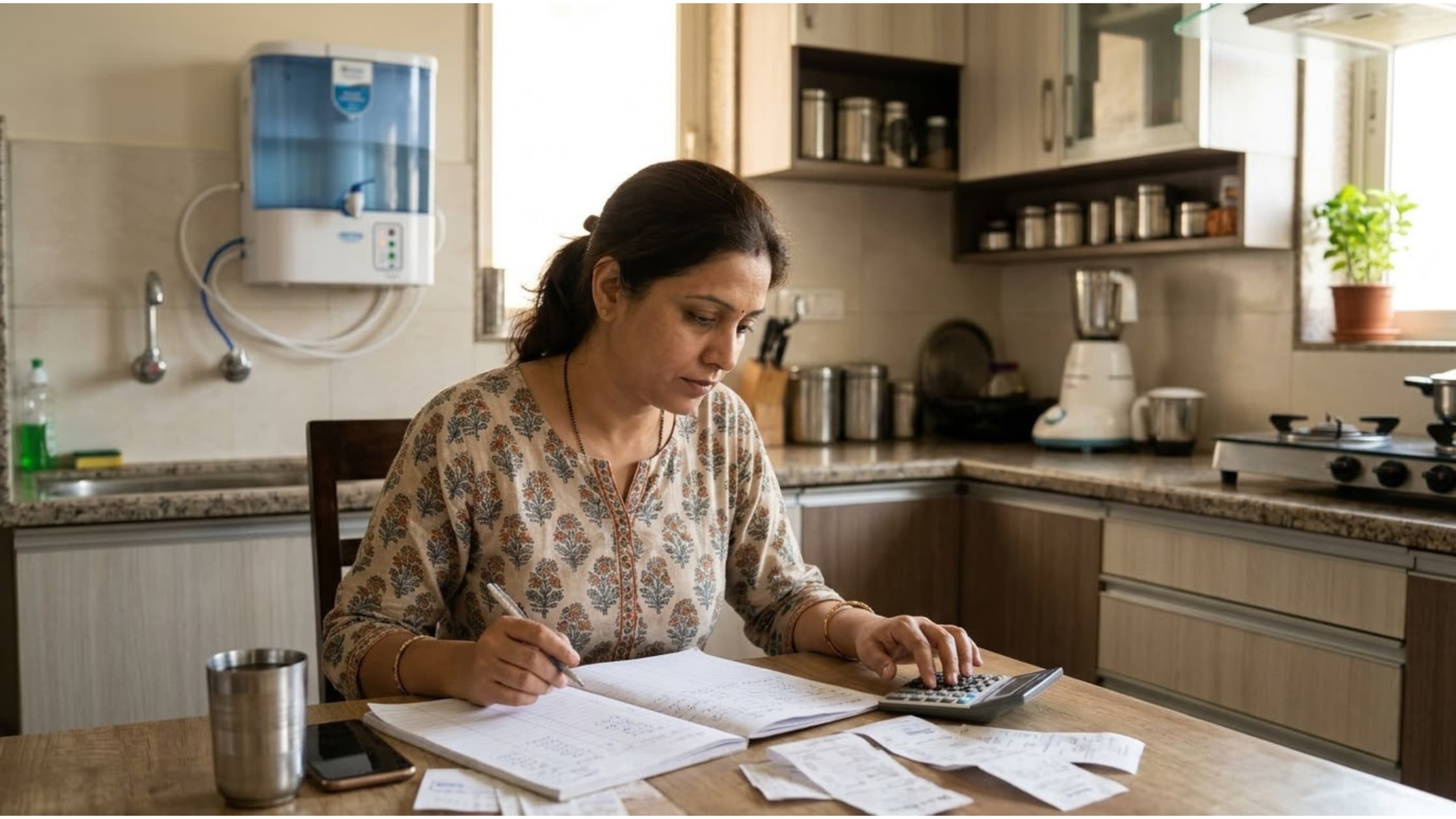
You do not need complex financial software to estimate what a purifier will actually cost you over its working life. Sit down with a notebook or spreadsheet and run through these practical steps before buying a unit.
- Choose a realistic ownership timeframe: Most households keep a domestic purifier for five years before upgrading or replacing an ageing machine. Use five years as your baseline calculation window.
- Record the net purchase cost: Write down the final invoice price after discounts, including any separate installation kit charges.
- Multiply annual filter replacements by four: Since the first year is often covered under a standard manufacturer warranty, multiply the cost of a complete yearly filter kit by the remaining four years.
- Add major component cycles: Check the price of a genuine RO membrane and UV lamp for the exact model you are considering. Multiply that cost by two to account for replacements in years three and five.
- Include a buffer for non-consumable repairs: Set aside a realistic annual reserve for electrical parts like power adapters or pumps once the initial warranty ends.
- Factor in shifting costs if you rent: If you live in a rented apartment in Coimbatore or frequently relocate for work or studies, add the cost of two or three uninstallation and reinstallation cycles.
- Divide the grand total by sixty months: Adding all these figures together gives your total five-year cost, and dividing by sixty shows your real effective monthly expense.link text
Comparing Upfront Purchase vs. Long-Term Ownership Expenses
Seeing each cost category side by side makes it easier to compare how expenses behave over time. The table below outlines how different cost components impact a household budget from the first day of purchase through year five.
| Expense Category | When It Occurs | Predictability | Impact on Total Lifespan Cost |
|---|---|---|---|
| Machine Purchase Price | Day one | Fixed upfront | High initial outflow, represents only part of total spend |
| Pre-Filter and Carbon Cartridges | Every 6 to 12 months | Regular recurring | Steady annual expense throughout ownership |
| RO Membrane and UV Lamp | Every 12 to 24 months | Periodic recurring | Significant jump in maintenance bills every second year |
| Electrical and Mechanical Parts | Years 2 to 5 | Unpredictable | Moderate to high surprise costs outside warranty |
| Shifting and Reinstallation | Whenever moving homes | Situational | High impact for tenants, students, and job movers |
| Resale Value at End of Life | Year 5 onwards | Very low | Minimal recovery, as used purifiers hold little resale value |
Hidden Costs Tenants and Relocating Professionals Often Miss
link textFor homeowners settled in one house for decades, owning an appliance offers long-term continuity. For tenants, bachelors, and families relocating to growing hubs like Coimbatore for IT, manufacturing, or educational opportunities, ownership carries extra friction.
When you move out of a rented house, you cannot simply unplug a wall-mounted purifier and pack it in a cardboard box. A technician must shut off the inlet valve, drain the tank, unmount the unit, and later drill and plumb it into your new kitchen. Furthermore, if your new apartment has very different water hardness—such as moving from a soft municipal supply area to a hard borewell zone—your existing purifier configuration may struggle without additional pre-filtration stages.
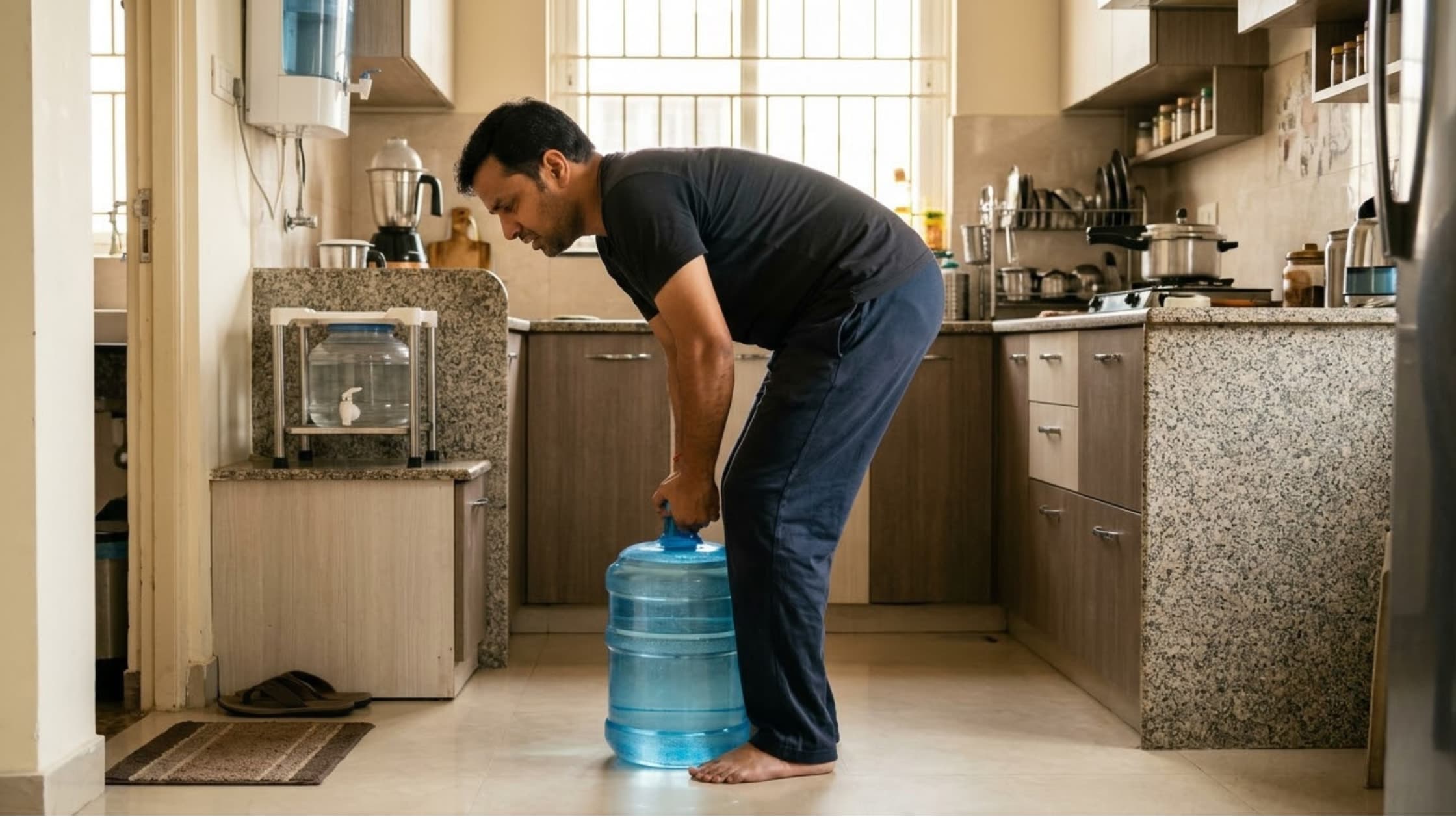
Reselling a used water purifier when leaving a city is also difficult. Second-hand buyers rarely pay much for used filtration units because they must immediately spend money on fresh filters and sanitization before drinking from them. As a result, a large portion of your upfront capital is effectively lost if you relocate within two or three years.
Practical Checklist Before Buying a Water Purifier
If you decide that purchasing a purifier makes sense for your living situation, use this checklist at the store or online before placing your order.
- • Test your tap water TDS (Total Dissolved Solids) first so you do not overpay for unnecessary purification stages.
- • Ask the seller for the exact retail price of an annual replacement filter kit and RO membrane before buying the machine.
- • Check whether the first-year warranty covers consumables like sediment filters or only electrical parts.
- • Verify the availability of authorized technicians in your specific locality or apartment complex.
- • Confirm whether your landlord permits drilling holes into kitchen tiles for wall mounting.
- • Estimate how many years you realistically plan to stay in your current city or rented residence.
How Renting a Water Purifier Simplifies Budgeting
When you calculate the true lifespan cost of a purchased water filter, the biggest challenge for many households is managing large upfront outflows alongside unpredictable repair bills. Renting a water purifier offers an alternative approach that turns appliance ownership into a predictable monthly household expense.
RentOMate is a water purifier rental service designed for Indian households, tenants, families, and working professionals who want clean drinking water without tying up savings in a depreciating appliance. Instead of worrying about reselling a unit when moving apartments or tracking down spare cartridges every few months, users can explore flexible subscription options directly through RentOMate. Because rental plans, included maintenance terms, and delivery areas can vary, readers should always verify current plan details, deposit terms, and service availability for their exact address on the website before subscribing.
Planning your monthly kitchen budget or relocating soon? Visit https://rentomate.life to check current water purifier rental options and confirm service availability in your area.
Frequently Asked Questions
1. What is the average lifespan of a domestic water purifier in India?
Most domestic RO and UV water purifiers last between five and seven years with regular filter replacements and timely servicing. Actual longevity depends heavily on daily water consumption, input water hardness, and voltage stability.
2. Why do water purifier maintenance costs increase after the first year?
During the first twelve months, manufacturing dlink textefects and certain service visits are typically covered under the standard warranty. From the second year onward, households bear the full retail cost of consumable cartridges, membranes, technician visit fees, and any out-of-warranty electrical repairs.
3. How often do water purifier filters need to be replaced?
External pre-filters and sediment cartridges generally require replacement every six to twelve months depending on how muddy or hard your tap water is. Internal RO membranes and UV lamps usually last between one and two years before needing replacement.
4. Does high TDS water increase the lifespan cost of a water purifier?
Yes. Total Dissolved Solids (TDS) measures the concentration of dissolved minerals and salts in water. Higher TDS levels force the RO membrane and pre-filters to trap more impurities every day, causing them to clog faster and requiring more frequent cartridge changes.
5. Are third-party replacement filters cheaper in the long run?
While generic third-party filters cost less upfront, inconsistent filtration quality can allow fine particles to reach and damage the expensive RO membrane prematurely. Using reliable, compatible components helps protect the core system from early failure.
6. Is it better to buy or rent a water purifier if I live in a rented apartment?
If you expect to move homes within one to three years, renting often helps you avoid heavy upfront spending, shifting reinstallation charges, and poor second-hand resale value. Buying generally makes more financial sense only when you plan to stay in the same home for five years or longer.
7. What costs are involved in shifting a purchased water purifier to a new house?
Relocating a purchased purifier usually involves paying for uninstallation at the old address, transporting the unit safely, purchasing fresh inlet pipes or connectors if needed, and paying for reinstallation at the new home.
Conclusion
Calculating the true lifespan cost of a purchased water filter gives you a clear, realistic picture of what clean drinking water actually costs over five years. By adding routine filter kits, membrane replacements, out-of-warranty repairs, and relocation fees to the initial sticker price, you can make a financial decision that fits your household stability and monthly budget. Before committing to a purchase, compare your five-year ownership total against flexible rental alternatives at https://rentomate.life and verify current plan terms for your home.
RO water purifier on rent in Coimbatore
From ₹449/month with free installation, service and filter changes. Try it free for 7 days.
by Rent O' Mate Team