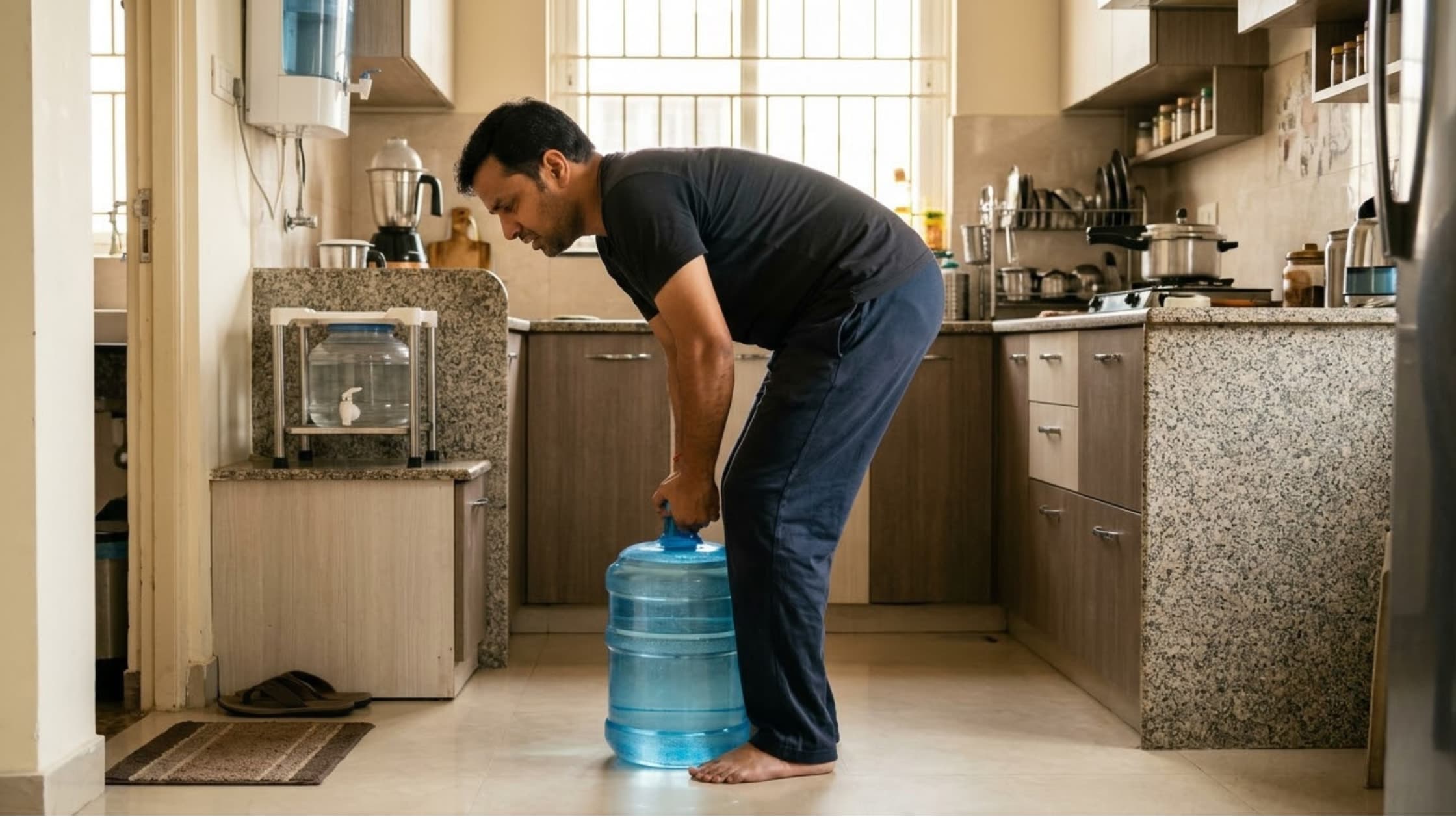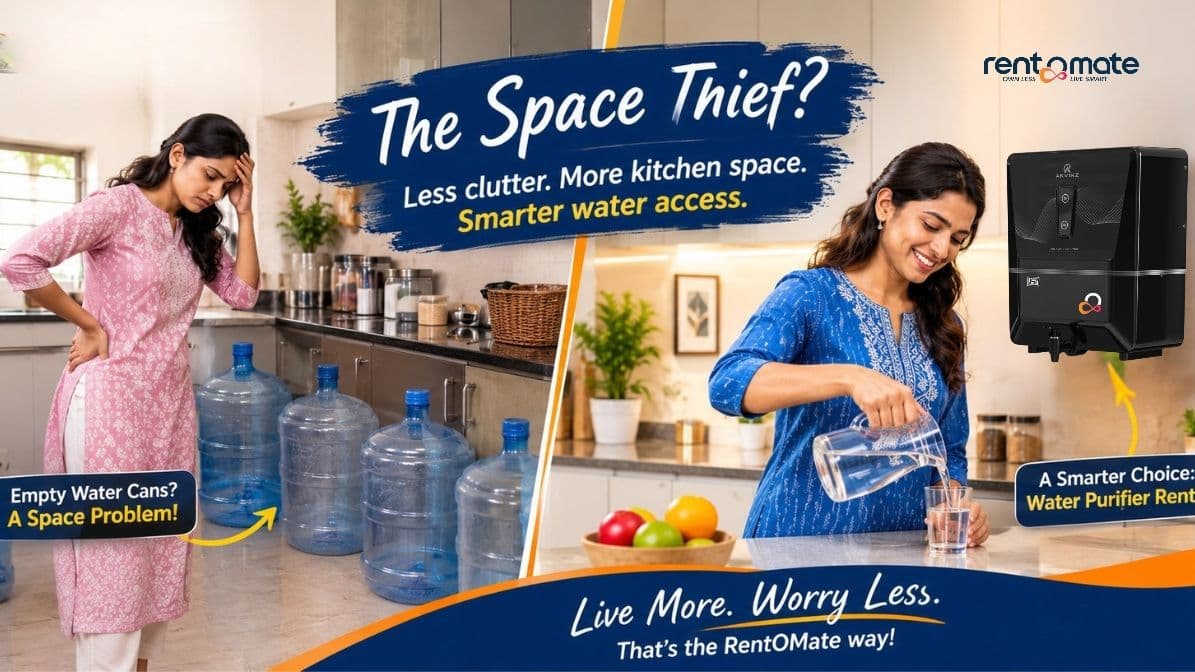
You have just finished preparing breakfast. You open the kitchen cabinet to take out a vessel, but something is blocking your way. An empty 20-litre water can is sitting in the corner. Another one is waiting near the refrigerator. There may even be two more beside the kitchen entrance, waiting for the next delivery person to collect them. Sound familiar? For many Indian households, especially those living in compact apartments, water-can storage has become an everyday space-management challenge. A full water can arrives, gets placed near the kitchen or dining area, and gradually becomes part of the household routine. Once it is empty, it needs to be kept somewhere until it is collected or exchanged. Then another full can arrives. Over time, these empty water cans start occupying valuable space that could otherwise be used for kitchen storage, movement, or everyday activities. If you live in a rented apartment or a compact home in Coimbatore, you probably understand how important every square foot can be. But is repeatedly managing and storing large water cans the only way to ensure drinking water availability at home? Let's explore why empty water cans become a space thief, how to manage them better, and whether a household water purifier rental could be a more convenient alternative.
When convenience starts occupying your kitchen
Water-can delivery is a familiar arrangement in many Indian households. You order drinking water, a delivery person brings a filled can, and the empty one is collected or exchanged. It is a convenient option for people who do not have an alternative drinking-water arrangement. However, the convenience comes with a small logistical challenge: where do you keep the cans? A 20-litre water can is not a small kitchen accessory. It is a large container that needs a suitable place, whether it is full or empty. In a spacious independent house, finding a temporary storage corner may not be difficult. But in a compact apartment kitchen, every corner already has a purpose. There are groceries to store, cooking vessels to organise, cleaning materials to keep, and appliances that need their own space. Adding multiple empty water cans to this arrangement can make the kitchen feel crowded.
Five places where empty water cans quietly steal space
- Kitchen corners: Empty cans often get pushed into corners that could otherwise be used for storage.
- Beside the refrigerator: The space next to the refrigerator becomes an informal parking area for empty containers.
- Near the kitchen entrance: Cans waiting for collection can obstruct convenient movement.
- Utility and balcony areas: Households may use balconies or utility spaces to store empty cans, reducing their usefulness for other purposes.
- Dining and living areas: In very compact homes, extra cans may end up outside the kitchen, affecting the overall appearance of the home.
The problem is not necessarily the number of cans delivered in one day. It is the repeated cycle of receiving, using, storing, and waiting for collection. When this cycle is not properly managed, empty cans gradually become part of the kitchen clutter.
Every square foot matters in an apartment kitchen
Modern apartments are designed to make efficient use of available space. However, a compact kitchen has limited flexibility when it comes to storing bulky household items. Consider a young couple living in a two-bedroom apartment in Saravanampatti or Peelamedu, Coimbatore. Their kitchen may already contain: - A refrigerator. - A microwave or other cooking appliances. - Kitchen cabinets and storage racks. - A washing or utility area. - Cooking vessels and grocery containers. - Cleaning materials. Now add three or four empty water cans waiting for collection. The result is a kitchen that feels more crowded than it actually is. It may become inconvenient to move around while cooking, access stored items, or clean the floor.
The everyday inconveniences of storing empty water cans
- Less available floor space for everyday kitchen activities.
- Difficulty accessing corners and storage areas.
- More items to move while sweeping and mopping.
- A cluttered appearance in an otherwise organised home.
- Additional effort when arranging delivery and collection.
- Difficulty finding a suitable storage location when multiple cans accumulate.
There is also a simple psychological aspect to consider. When you enter your kitchen, you want to see a clean and organised space where everything has its place. A collection of empty containers waiting for the next delivery can make even a well-maintained kitchen feel untidy. Sometimes, the problem is not that your kitchen is too small. It is that too many things are competing for the same limited space.
It is not just about storing the cans
The space problem is only one part of the water-can routine. Think about everything involved in managing drinking-water cans at home. You need to remember when the current can is likely to become empty, place the next order, receive the delivery, manage the exchange, and ensure that empty cans are collected. This is a recurring household activity. For working professionals, busy couples, and families with demanding daily schedules, coordinating these small activities can become inconvenient. Consider a typical situation: You have one empty can at home, another partially used can, and a fresh delivery arrives. The delivery person may collect the empty can, but if collection is delayed, you need to keep it somewhere. This is how a temporary storage arrangement can gradually become a permanent corner of your kitchen.
Questions worth asking about your water-can routine
How many empty cans are currently occupying space in your home? Do you have a dedicated place to store them? How frequently are empty cans collected? Do deliveries sometimes arrive before the previous empty cans are collected? Are the cans occupying useful kitchen or utility space? Would an alternative drinking-water arrangement make your daily routine simpler?
The purpose of asking these questions is not to suggest that water-can delivery is unsuitable for everyone. It is to understand whether the arrangement still fits your household's space, schedule, and daily requirements.
Five simple ways to organise your water-can storage
If you currently depend on water-can deliveries, a few practical changes can help you manage the available space more effectively.
- Create a dedicated storage corner: Select a suitable location away from cooking areas and regular walking paths.
- Avoid unnecessary accumulation: Coordinate your deliveries so that empty cans do not remain unused for extended periods.
- Request timely collection: Contact your supplier when empty cans are waiting for collection.
- Keep containers organised: Store cans securely in an appropriate position where they cannot easily fall or obstruct movement.
- Review your household consumption: Understand how much drinking water your family actually needs so that you can plan deliveries appropriately.
Remember that empty cans should be kept clean and handled according to the supplier's instructions. Do not use damaged or unsuitable containers for drinking-water storage, and avoid storing them in ways that create safety or hygiene concerns. These small habits can make your existing water-can arrangement more manageable. However, if you continuously struggle with storing and managing multiple cans, it may be worth exploring a different approach.
What if your drinking-water arrangement did not require repeated can storage?
Imagine having a water purifier installed in your kitchen. Instead of repeatedly arranging water-can deliveries and finding space for empty containers, you have a household purification appliance that provides drinking water through the connected water supply, subject to the purifier's design and operating requirements. You use a clean glass, collect the required drinking water, and keep your kitchen organised. There is no need to maintain a collection of empty delivery cans as part of your regular drinking-water routine. This is one reason why household water purifiers are worth considering, particularly for apartment residents who want a more integrated drinking-water arrangement.
Water cans versus a household water purifier
| Comparison factor | Water-can delivery | Household water purifier |
|---|---|---|
| Drinking-water arrangement | Water supplied in containers | Water processed by an installed appliance |
| Empty container storage | Required until collection or exchange | No regular delivery-can storage |
| Delivery coordination | Recurring delivery and collection | No routine water-can delivery |
| Kitchen space | Requires suitable can storage | Requires suitable purifier installation space |
| Daily usage | Pour water from the container | Dispense or collect water according to the appliance design |
| Maintenance | Container handling and supplier coordination | Purifier servicing and consumable management |
| Initial arrangement | Order and receive cans | Purchase or rent and arrange installation |
Both arrangements have their own advantages and limitations. Water-can delivery can be convenient when a household needs a supplied drinking-water option without installing an appliance. A household water purifier can be more convenient for people who prefer an installed drinking-water solution and want to avoid regularly storing delivery cans. The right choice depends on your water source, household consumption, available space, and the maintenance responsibilities you are comfortable managing.
Enjoy the convenience of a purifier without necessarily purchasing one
One concern people sometimes have about switching from water-can delivery to a household purifier is the initial purchase investment. A good-quality purifier represents an additional household expense. There may also be ongoing servicing and component replacement costs. This is where water purifier rental becomes an alternative worth exploring. Instead of purchasing the appliance outright, households can use a purifier through a rental arrangement, subject to the provider's terms and conditions. For someone living in a rented apartment, this may offer a practical way to access a household water purifier without making a permanent appliance purchase. It can also be relevant to working professionals, young couples, students, and families who prefer recurring payments over a larger upfront purchase.
Who may benefit from this alternative?
- Apartment residents: People who want to make better use of limited kitchen space.
- Working professionals: Individuals who prefer a convenient drinking-water arrangement alongside busy schedules.
- Tenants: People who may not want to purchase and relocate another household appliance.
- Newly married couples: Couples setting up their first home who want to manage household expenses carefully.
- Small families: Households looking for an alternative to repeated water-can storage and delivery coordination.
- Students and bachelors: People living independently who want to explore flexible household appliance arrangements.
Before choosing arental purifier, consider your incoming water source and whether the selected purification technology is suitable for your water characteristics. Also check the rental period, monthly charges, security deposit, installation conditions, filter replacement responsibilities, servicing inclusions, and relocation policy. A rental arrangement should make your household routine more convenient, not introduce unexpected responsibilities.
Less clutter. More convenience. A smarter way to live.
At RentOMate, we believe that modern living is not about owning every appliance in your home. It is about choosing practical solutions that suit your lifestyle. Our water purifier rental concept is built around this philosophy. For households that want an alternative to repeatedly managing drinking-water cans, renting a household water purifier is an option worth considering. Instead of thinking only about where to keep the next empty can, you can explore an installed purifier arrangement that fits your kitchen and household requirements. Whether you are a working couple in Peelamedu, a family in Vadavalli, an IT professional in Saravanampatti, or a tenant moving into a new apartment in Coimbatore, your drinking-water arrangement should suit the way you live. Explorethe available options and rental terms through the RentOMate website.
1. Q1. Why do empty 20-litre water cans create problems in small kitchens?
Empty 20-litre water cans are bulky and require temporary storage until collection or exchange. When multiple cans accumulate, they can occupy valuable floor space, obstruct movement, and make a compact kitchen feel cluttered.
2. Q2. How can I store empty water cans in a small apartment?
Choose a dedicated storage corner away from cooking areas and walking paths. Keep the cans organised and secure, avoid unnecessary accumulation, and coordinate timely collection with your water supplier.
3. Q3. Is water-can delivery better than installing a water purifier?
Both options have advantages. Water-can delivery provides drinking water in supplied containers, while a purifier provides an installed household purification arrangement. Your choice should depend on your water source, household requirements, available space, and maintenance preferences.
4. Q4. Can a water purifier help reduce kitchen clutter?
Yes. A suitable household water purifier can reduce the need to store empty delivery cans regularly. However, you must still allocate appropriate space for the purifier and follow its installation and maintenance requirements.
5. Q5. Is renting a water purifier suitable for apartment residents in Coimbatore?
It may be suitable for apartment residents who prefer recurring rental payments rather than purchasing an appliance. Check the available rental options, installation requirements, service terms, and address availability before subscribing.
6. Q6. Does renting a water purifier eliminate maintenance responsibilities?
Not automatically. Maintenance responsibilities depend on the rental agreement. Confirm whether filter replacements, membrane changes, routine servicing, and repairs are included or separately chargeable.
7. Q7. What should I check before switching from water cans to a water purifier?
Understand your incoming water source, household consumption, suitable purification technology, installation requirements, storage capacity, and maintenance schedule. Choose an appliance appropriate for your actual water conditions.
8. Q8. Can I use a rented water purifier if I move to another apartment?
That depends on the rental provider's relocation policy and service availability at the new address. Before subscribing, confirm whether dismantling, transportation, reinstallation, and relocation charges are covered.
Your Kitchen Deserves More Space. Your Life Deserves More Convenience.
An empty water can may look like a small household problem, but when several cans begin occupying your kitchen, the inconvenience becomes difficult to ignore. In a compact apartment, every corner matters. Space that should be available for cooking, storage, and everyday movement should not become a permanent parking area for empty containers. If water-can delivery continues to suit your household, better storage and timely collection can help. But if managing repeated deliveries and empty-can storage has become inconvenient, it may be time to explore a different drinking-water arrangement. A household water purifier, including a suitable rental option, can offer another way to manage everyday drinking water while reducing dependence on delivery cans. At RentOMate, we believe in making everyday living simpler through practical rental choices. Explore RentOMate water purifier rental solutions and discover a smarter way to enjoy your kitchen space. RentOMate – Own Less. Live Smart.
RO water purifier on rent in Coimbatore
From ₹449/month with free installation, service and filter changes. Try it free for 7 days.
by Rent O' Mate Team