Those white marks on your kitchen vessels have a story
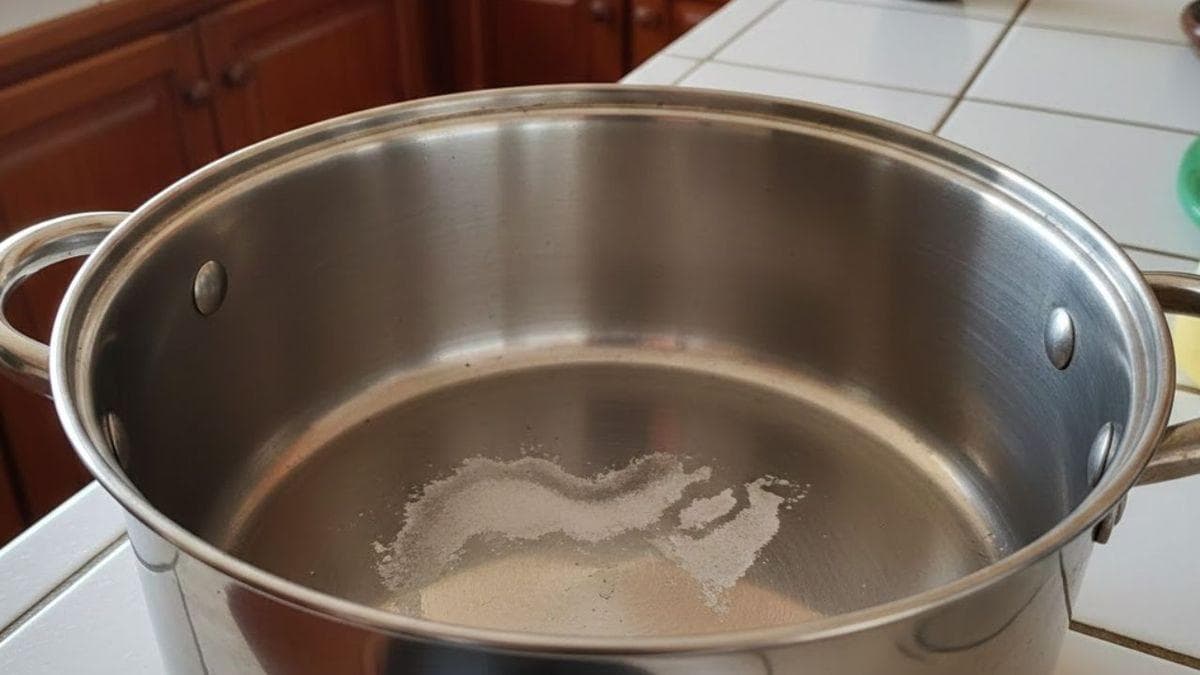
You finish cooking, wash the vessels, leave them to dry and return to the kitchen later. Your stainless steel kadai has a white ring near the waterline. The bottom of your kettle has a chalky layer. Even your freshly washed drinking glasses seem to have cloudy marks. Sound familiar? Many Indian households deal with these everyday kitchen frustrations. The immediate reaction is often to scrub harder, use more dishwashing liquid or wonder whether the water is dirty. But there is another possible explanation: hard water and the mineral deposits it leaves behind. Understanding what causes these marks helps you clean your utensils more effectively, avoid damaging expensive cookware and make better decisions about household water treatment. For households inCoimbatore,where water sources and building storage conditions can vary, the sensible approach is to understand your own water rather than assume every home faces the same problem.
What is hard water?
Hard water is water containing relatively high amounts of dissolved minerals, especially calcium and magnesium. These minerals can enter water naturally as it passes through soil and rocks. Water hardness is commonly measured in milligrams per litre (mg/L), expressed as calcium carbonate (CaCO₃). A commonly used general classification is shown below. These categories are useful for understanding hardness, but they are not a complete drinking-water safety assessment.
| General hardness level | Hardness as CaCO₃ |
|---|---|
| Soft | 0–60 mg/L |
| Moderately hard | 61–120 mg/L |
| Hard | 121–180 mg/L |
| Very hard | Above 180 mg/L |
Different organisations may use slightly different classification boundaries. This table is a general guide, not a substitute for a laboratory report. Why are calcium and magnesium present in water? As water travels through the ground, it can dissolve naturally occurring minerals from rocks and soil. Groundwater may therefore contain varying amounts of calcium and magnesium. The final hardness depends on factors such as the source of the water and the local geology. Water from different sources, or even different supplies within the same city, may have different characteristics.
Why does hard water scaling happen on kitchen utensils?
The science is straightforward: minerals dissolved in water can form solid deposits under certain conditions. 1. Water is heated When water containing hardness minerals is heated, some dissolved compounds can precipitate and form scale, particularly when the water contains the right combination of calcium, magnesium, bicarbonate and carbonate. 2. Water evaporates When water droplets dry on a vessel, the water disappears but non-volatile dissolved minerals may remain on the surface, creating spots or a chalky film. 3. Deposits build up over time Repeated boiling, filling and drying can gradually make the scale more visible, especially inside kettles and other frequently heated vessels. These mechanisms explain why a vessel may look clean immediately after washing but develop white marks once it dries. Mineral deposits from hard water are well documented in household water guidance. Is every white mark caused by hard water? No. Hard water is one common cause, but white residue can also come from detergent, dishwashing products or other deposits. Rust-coloured marks may have a different cause, such as iron. If the deposits return repeatedly, consider the pattern, the surface involved and the source of the water before deciding on a remedy.
Where do you commonly see hard-water scale?
Stainless steel cooking vessels White rings and chalky marks may form where water repeatedly collects and evaporates. Deposits can be particularly visible on polished steel. Kettles and water-heating appliances Mineral scale can accumulate on heating surfaces and reduce heating efficiency when the buildup becomes significant. Drinking glasses and serving bowls Dried water droplets can leave cloudy spots or a thin mineral film that makes glassware look less transparent. Kitchen taps and sink fittings Water that collects around the base of taps can dry repeatedly, leaving stubborn white marks along joints and edges. The pattern matters. Scale that appears repeatedly in several places supplied by the same water source may justify checking hardness. A single stain on one utensil may simply be a cleaning or material issue.
Is hard-water scaling dangerous?
Not necessarily. Hard-water scale is usually a nuisance associated with dissolved minerals, and hardness alone does not determine whether water is safe to drink. Calcium and magnesium are naturally occurring minerals. The main household concerns with hard water are often visible deposits, reduced cleaning efficiency, soap scum and scale buildup in equipment. U.S. Geological Survey+1 However, the absence of scale does not prove water is safe either. Water may contain microbial or chemical contaminants that cannot be identified by looking at a vessel or examining its mineral deposits. For a proper drinking-water assessment, consider relevant parameters such as:
- Hardness: helps explain mineral deposits and scaling.
- TDS (total dissolved solids): indicates the total concentration of dissolved substances, but does not identify each substance or establish safety by itself.
- Microbiological quality: helps assess contamination by disease-causing microorganisms.
- Other chemical parameters: selected according to the water source and possible local risks.
In India, the Bureau of Indian Standards publishes the drinking-water specification IS 10500. Testing should be selected according to the applicable standard and the concerns relevant to your supply. The takeaway: Do not panic when you see white scale, but do not use it as your only water-quality test.
How to remove white scale from kitchen utensils safely
For light mineral deposits, start with gentle cleaning rather than aggressive scrubbing or harsh chemicals. Method 1: Diluted white vinegar 1. Mix white vinegar with water. 2. Apply to a compatible utensil or soak the affected area briefly. 3. Wipe gently with a soft sponge. 4. Rinse thoroughly and dry. Vinegar's acidity can dissolve many carbonate-based mineral deposits. Check the utensil manufacturer's instructions first. Method 2: A suitable citric-acid solution Citric acid can help loosen mineral scale on compatible surfaces. Follow the product instructions for concentration, contact time and rinsing. Method 3: Gentle wiping and thorough drying For fresh, light deposits, a soft sponge and ordinary dishwashing liquid may be sufficient. Rinse off all cleaning residue and dry the utensil with a clean cloth. Important cleaning precautions
- Avoid steel wool and abrasive scrubbers on delicate or polished finishes.
- Do not use vinegar or citric acid on surfaces that may be acid-sensitive, including some natural stone, coatings and materials specified as incompatible by the manufacturer.
- Do not mix cleaning acids with bleach or other cleaning chemicals.
- Do not leave acidic solutions in cookware for extended periods without checking the manufacturer's guidance.
- For electric kettles, follow the manufacturer's descaling instructions and rinse thoroughly before use.
A simple rule: remove the deposit without damaging the utensil. Stronger chemicals are not automatically a better solution.
How can you reduce hard-water scaling in the future?
You may not be able to eliminate scale simply by changing your washing routine, but these habits can reduce visible buildup.
- Dry utensils after washing. Use a clean, soft cloth to reduce water spots left by evaporation.
- Avoid leaving water standing unnecessarily. Empty and rinse compatible vessels after use.
- Descale kettles when needed. Follow the manufacturer's instructions and avoid excessive cleaning.
- Use detergent appropriately. Follow product directions instead of adding more detergent automatically.
- Test the water if the problem is persistent. A hardness test can help establish whether mineral content is contributing to the issue.
- Choose treatment based on test results. Do not buy a purifier or softener solely because you see white marks on your vessels.
Should you install a water softener? A water softener designed for hardness reduction can help reduce calcium- and magnesium-related scale. Reverse oslink textmosis (RO) can also reduce many dissolved substances, including hardness-causing ions, when properly selected and operated. However, the right choice depends on the water's actual characteristics, the intended use and the equipment's design. Whole-house softening and drinking-water purification are different needs and should not be treated as interchangeable.
Hard water and Coimbatore households: What should you check?
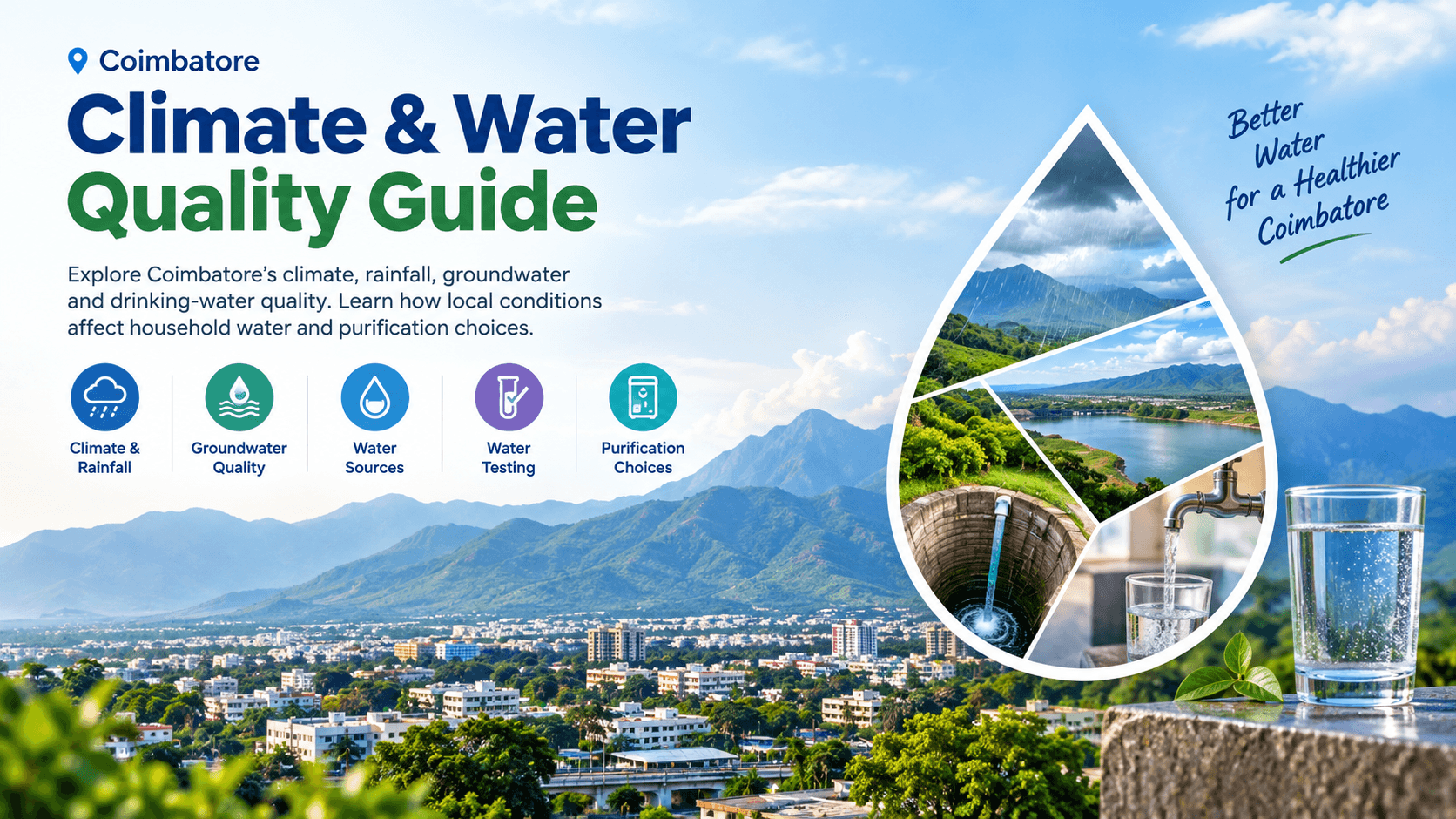
If you live in Coimbatore, Tamil Nadu, and notice recurring white marks on kitchen utensils, begin by checking the water supplied to your own home. Residential areas such as Peelamedu, Saravanampatti, Kalapatti, Ganapathy, Vadavalli and Thudiyalur provide useful local context for readers, but the area name alone cannot tell you the hardness or safety of your water. Water characteristics may vary according to the supply source, groundwater contribution, storage tanks, plumbing and changes in supply conditions. This is why a neighbour's experience is not a reliable substitute for testing your own supply. A practical water-quality checklist for your home
- Identify whether your household uses municipal supply, borewell water, tanker water or a combination.
- Check whether scale forms in multiple vessels or only on one surface.
- Ask your apartment association or water supplier whether a recent water-quality report is available.
- Consider a hardness test if scaling is frequent.
- If drinking-water safety is a concern, arrange appropriate testing beyond hardness alone.
- Select treatment equipment only after considering the results and the intended use.
Does a water purifier solve hard-water scaling?
Not every water purifier is designed to remove hardness, and not every purifier will stop white marks from appearing on cooking utensils.
| Treatment option | Main purpose | What to know |
|---|---|---|
| Sediment filter | Reduces suspended particles | Does not normally remove dissolved calcium and magnesium hardness. |
| Activated carbon filter | Reduces certain substances affecting taste, odour or other water characteristics | Is not, by itself, a general hardness-removal method. |
| Water softener | Reduces hardness-causing calcium and magnesium ions | Designed primarily for hardness management; suitability depends on the household's needs. |
| RO system | Reduces many dissolved substances through a membrane | Performance depends on feed water, system design, maintenance and operating conditions. |
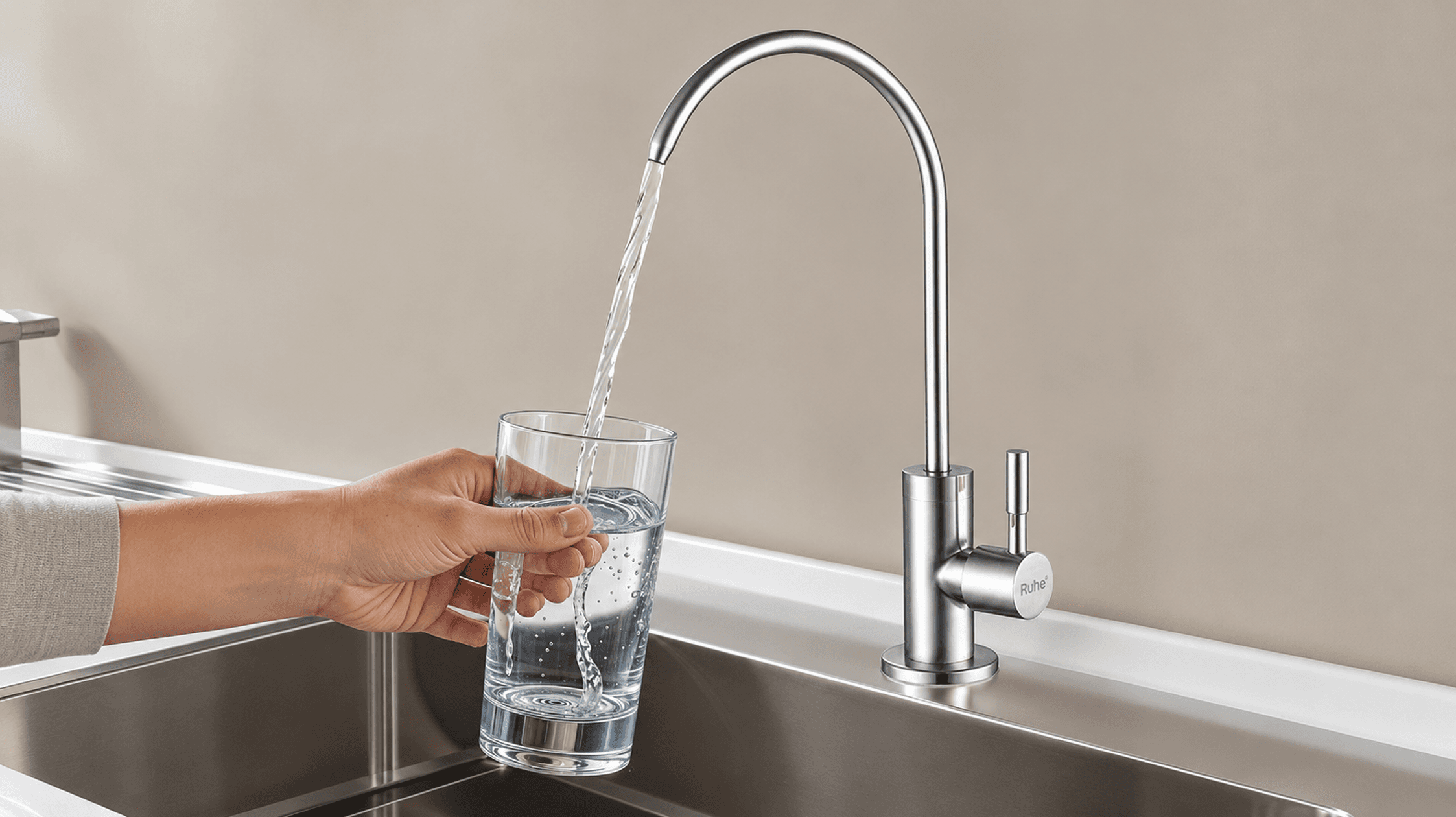
A drinking-water RO purifier may help reduce dissolved minerals in the water it treats, but it will not remove scale that has already formed on your cooking vessels. It also will not necessarily treat all the water entering your kitchen or bathroom. If your main concern is drinking-water quality, choose a system based on water testing and the relevant contaminants. If your main concern is scale across the home, investigate hardness management separately.
A smarter water-purifier choice with RentOMate
Buying a water purifier is not the only way to access one. For households that prefer not to make a large upfront appliance purchase, RentOMate offers a rental-based approach aligned with its brand message: Own Less. Live Smart. Water purifier rental may be worth exploring if you:
- Live in a rented apartment in Coimbatore.
- Prefer a monthly payment rather than purchasing a purifier outright.
- Expect to relocate and want to consider an alternative to owning another appliance.
- Prefer maintenance and servicing arrangements defined by a rental plan rather than managing every ownership responsibility independently.
Before choosing a plan, confirm the current monthly rental, installation arrangements, deposit or other applicable charges, minimum tenure, relocation conditions and the precise maintenance and replacement coverage. An important distinction: Renting a purifier is an appliance-access choice; it is not, by itself, a solution to every hard-water problem. Confirm that the selected purifier is suitable for your tested water quality and intended use. Explore RentOMate at rentomate.life to review the available options and confirm current plan details.
1. Why do my stainless steel utensils develop white stains after washing?
White stains commonly appear when water containing dissolved minerals dries on the utensil. Calcium- and magnesium-related deposits may leave a chalky film, particularly around waterlines and on surfaces where droplets repeatedly evaporate. Detergent residue can also cause white marks, so consider both possibilities.
2. Is white scale on kitchen utensils a sign that water is unsafe?
No. White scale can indicate mineral deposits associated with hard water, but it cannot establish whether water is safe or unsafe to drink. Water safety requires appropriate testing for relevant microbiological and chemical contaminants. Clear water without visible deposits is not necessarily safe either
3. How can I remove hard-water stains from stainless steel vessels?
Try diluted white vinegar on a small, inconspicuous area if the utensil manufacturer permits acidic cleaners. Wipe gently with a soft sponge, rinse thoroughly and dry. Avoid abrasive scrubbers, strong acids and prolonged soaking unless the product instructions confirm they are suitable.
4. Does boiling hard water remove its hardness?
Boiling can precipitate some temporary hardness, particularly when calcium bicarbonate is present, but it does not remove all types of hardness. Some dissolved minerals can remain in the water. Boiling should therefore not be treated as a complete water-softening method or a substitute for appropriate water testing.
5. Does an RO water purifier prevent white scale on utensils?
An RO system can reduce many dissolved minerals, including hardness-causing ions, depending on its design and performance. However, a drinking-water purifier normally treats only the water passing through it. It will not necessarily prevent scale on vessels washed with untreated kitchen water or throughout the house.
6. Is hard water common in Coimbatore?
Water hardness can vary with the source of water, local geology, supply conditions and household storage. It would not be accurate to classify all Coimbatore households or neighbourhoods as having hard water without suitable evidence. If you notice recurring scale, arrange a hardness test for your own supply.
7. Should I rent a water purifier or buy one to deal with hard water?
First, establish your water-quality requirements. Then compare suitable systems, purchase costs or rental payments, installation charges, maintenance responsibilities and replacement terms. RentOMate may suit households that prefer a rental arrangement, but confirm that the selected purifier meets your water-treatment needs and review the applicable plan conditions before committing.
Understand the scale before choosing the solution
White deposits on your kitchen utensils can be frustrating, especially when you have just finished cleaning them. But those marks often tell you more about dissolved minerals and drying conditions than they do about the overall safety of your drinking water. The smart approach is simple: clean your utensils gently, prevent avoidable residue, test your water if scaling persists and choose treatment based on the results. For Coimbatore households, understanding your own water supply is more useful than making assumptions based on your neighbourhood. And when you need a drinking-water purifier without committing to outright ownership, explore the rental options available through RentOMate.
Try Rent O' Mate free for 7 days
Starts from ₹449/month – Get pure RO water at home, with free installation and zero maintenance worries.
by Rent O' Mate Team